
 Call Us Now: 888.945.2611

Call Us Now: 888.945.2611
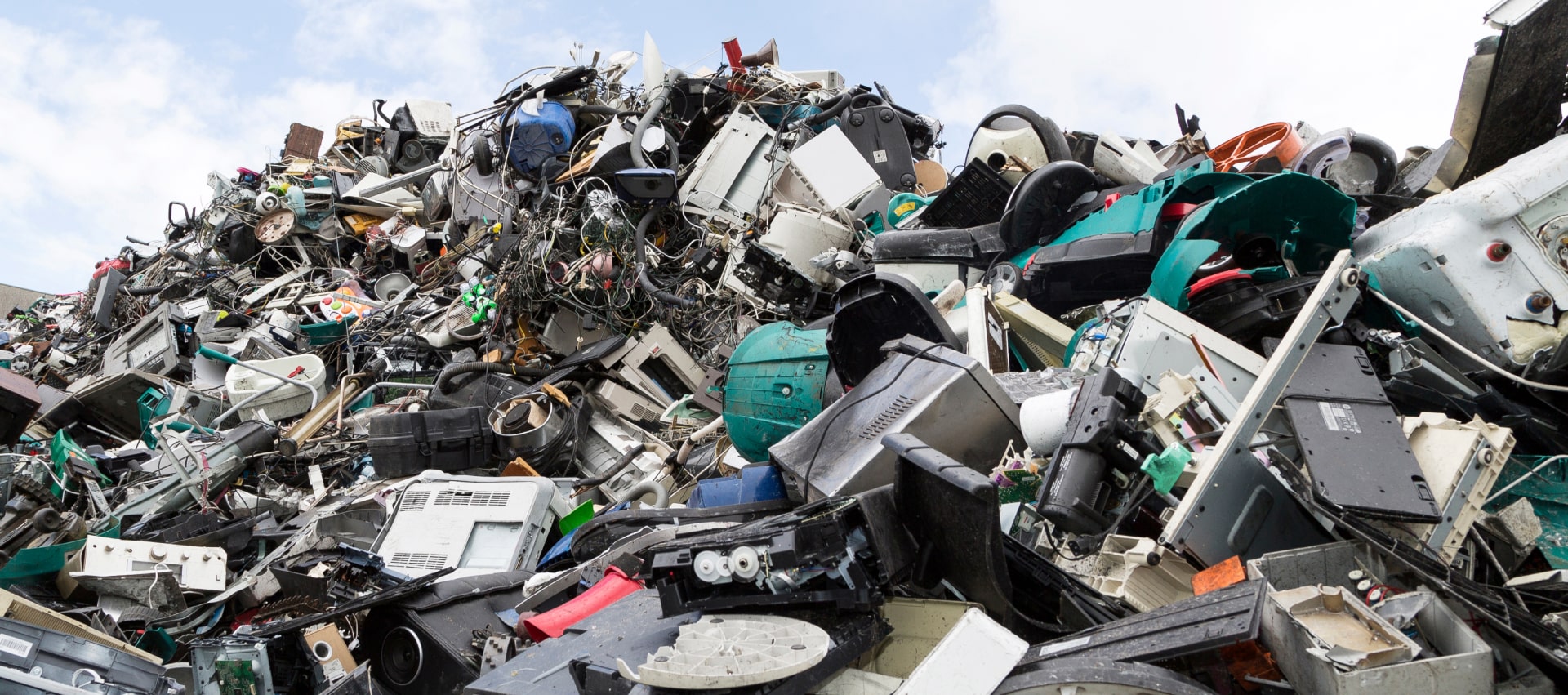
We Offer Comprehensive Recycling Services for Your
Used Electronics
and Other Electrical Equipment.

Jul 14, 2026

Canadian organizations are consolidating server rooms and shifting workloads to cloud and colocation providers at a record pace, and every one of those projects ends the same way: racks of end-of-life assets that still hold sensitive data. Data centre decommissioning is the structured process of retiring that infrastructure, covering asset inventory, certified data destruction, de-installation, resale, and material recovery. This guide walks IT directors and facilities managers through each phase, anchors the compliance obligations in Canadian law, and closes with a step-by-step data centre decommissioning checklist your team can put to work today.
Decommissioning rarely means shutting down an entire facility. More often, it’s the removal of a defined set of infrastructure from a server room, data hall, or colocation cage. The most common triggers include:
Whatever the trigger, the risk profile is the same. Every drive in every rack potentially holds customer records, financial data, or intellectual property, and that data survives a simple power-down. If you’re still building the business case, our overview of what it means to decommission retired assets covers the fundamentals.
Every successful decommission starts months before anyone unplugs a cable. The planning phase produces three deliverables: a scope of work, a stakeholder map, and a verified asset inventory.
The scope of work defines which racks, rooms, or facilities are in play, the target completion date, the budget, and the expected outcomes, including anticipated resale recovery. It should also name a single project manager who owns the timeline from start to finish.
The stakeholder map matters because decommissioning touches more teams than IT. Finance needs asset write-off data, legal needs proof of compliant data destruction, facilities controls site access, and business units need warning about any service downtime during workload migration.
The asset inventory is the backbone of the entire project. Record every server, switch, router, storage array, PDU, and rack, along with serial numbers, locations, and network dependencies. Reconcile the physical count against your configuration management database, because ghost assets and undocumented equipment appear in almost every audit. This inventory becomes your chain-of-custody baseline: what you count at the start must match what your ITAD provider receipts at the end.
Data security is where decommissioning projects create legal exposure, and Canadian obligations are specific. PIPEDA requires organizations to destroy, erase, or anonymize personal information that’s no longer needed, and Quebec’s Law 25 adds provincial teeth with significant monetary penalties for organizations that mishandle personal information at end of life. Regulated sectors layer on their own frameworks, from PCI DSS for payment data to provincial health privacy statutes.
Meeting those obligations during a decommission comes down to two things: certified destruction and documented chain of custody. Every data-bearing device should be sanitized or physically destroyed by a certified provider, with a serialized certificate of destruction issued for each drive. From the moment equipment leaves the rack to the moment it’s processed, custody should be tracked through tagged assets, locked and sealed transport, and receipt reconciliation against your inventory.
A certified IT asset disposition partner manages this entire sequence, including on-site or off-site destruction options and audit-ready reporting. The certificates aren’t paperwork for the sake of paperwork. They’re the evidence you’ll produce if a regulator, auditor, or breach investigator ever asks what happened to drive serial numbers such-and-such.
Physical removal is more demanding than most teams expect. Data centre equipment is heavy, densely cabled, and often located behind strict site access controls, especially in colocation facilities.
A logical teardown sequence protects both people and assets. Software and virtual machines are decommissioned first, followed by network gear, servers, and storage. Ancillary equipment such as UPS units, rails, cabling, and cabinets comes out last. Each item is tagged against the inventory as it leaves the rack.
Packing and transport requirements deserve their own line in the project plan. Palletizing servers takes proper foam, crates, and lift equipment, and secure transport means locked, sealed, and tracked vehicles so the chain of custody remains intact between your facility and the processing site. Colocation providers typically also specify how a vacated cage must be left, down to floor tiles and cable trays.
This is a phase worth outsourcing. eCycle’s national recycling and pickup services handle de-installation, packing, and secure transport across every Canadian province, which keeps your internal team focused on the migration rather than the moving.
Decommissioning isn’t just a cost centre. Handled well, it returns real money to your IT budget. Servers retain 70 to 80 percent of their value when they’re recovered, tested, and remarketed properly, and enterprise network gear, storage arrays, and even rack infrastructure hold meaningful resale value on the secondary market.
The key is treating value recovery as a planned outcome rather than an afterthought. During the inventory phase, each asset should be assessed and routed to one of three paths: redeploy internally, resell after certified data destruction, or process for material recovery. The table below shows how typical data centre assets break down.
| Asset Type | Typical Disposition Path | Value Recovery Potential |
|---|---|---|
| Servers (3 to 5 years old) | Data destruction, refurbishment, resale | High. Servers retain 70 to 80% of their value |
| Network switches and routers | Configuration wipe, refurbishment, resale | Moderate to high |
| Storage arrays and drives | Certified sanitization or shredding, then resale or material recovery | Moderate |
| Racks, rails, and PDUs | Refurbishment or material recovery | Low to moderate |
| Cabling and batteries | Material recovery and specialized processing | Commodity value |
Through eCycle’s resale and refurbishment program, tested equipment is remarketed and the returns are shared back with you, with an option to direct proceeds to charity. That recovered value routinely offsets a significant portion of total project cost, which is a figure worth including in the business case you take to finance.
Whatever can’t be resold still has to be processed responsibly, and in Canada that’s a regulated activity. Provincial extended producer responsibility (EPR) programs govern how electronics are collected and recycled in each province, and corporate ESG commitments increasingly require documented proof of responsible server disposal rather than a vague assurance.
This is where certifications do the heavy lifting. eCycle Solutions operates under R2v3, the current benchmark standard for responsible electronics recycling, along with ISO 9001, ISO 14001, and ISO 45001. Server recycling under these standards means end-of-life assets are dismantled and separated into commodity streams, with metals, plastics, and circuit boards diverted from landfill and returned to manufacturing supply chains. The result is 100% landfill diversion, backed by documentation you can cite in sustainability reporting.
If you want the full picture of that downstream process, we’ve mapped out what happens to IT assets after secure disposition from receiving dock to material recovery.
Here’s the full sequence, condensed into a checklist you can share with your team and your ITAD partner.
Data centre decommissioning is the process of removing IT assets from a data centre, including shutting down, de-installing, and disposing of servers, network equipment, and storage that’s no longer needed. It typically involves asset inventory, workload migration, certified data destruction, secure logistics, and resale or recycling of the retired equipment.
A small decommission covering a few racks typically takes four to eight weeks, while a full facility shutdown can run six months or longer. The timeline depends on the number of assets, the complexity of workload migration, site access constraints, and how early the asset inventory and ITAD partner are locked in.
Costs scale with the number of racks, the labour required for de-installation, transport distances, and data destruction requirements, so there’s no single figure. The more useful number is net cost: because servers retain 70 to 80 percent of their value at resale, recovered value often offsets a substantial share of the project budget.
Server decommissioning follows a fixed sequence: back up and migrate workloads, remove the server from the network, cancel associated licences and support contracts, sanitize or destroy the drives with certified data destruction, and then route the hardware to resale or material recovery. Each step is documented so the asset’s chain of custody stays intact from rack to final disposition.
Most decommissioned servers are data-wiped, refurbished, and resold on the secondary market, where recent-generation equipment retains most of its value. Units that can’t be resold are dismantled for material recovery, with metals, plastics, and circuit boards separated and diverted from landfill under certified recycling standards such as R2v3.
Decommissioning a data centre is a compliance project, a logistics project, and a value recovery opportunity rolled into one, and the outcome depends on how early you plan for all three. eCycle Solutions manages the full sequence across Canada, from asset inventory and certified data destruction through pickup, resale, and 100% landfill diversion. Request a Quote to scope your decommissioning project with our team, or call 888.945.2611.
Tricia Oldfield is VP Sales & Marketing at eCycle Solutions, Canada’s certified e-waste recycler and ITAD provider. R2v3 certified.

eCycle Solutions is my most recommended and is a highly reputed electronics solutions company. Their team is highly efficient and supportive! My experience with them was so great that I will consider them in the future for sure! Highly recommended!

It is so important to properly recycle your electronics and ensure they do not end up in a landfill. eCycle Solutions is my number one choice! They ensure your electronics are recycled properly. Highly recommended!
eCycle Solutions is Canada’s best electronic recycler. Great team, polite and friendly customer service. Thank you eCycle Solutions for doing a wonderful job. Highly recommended!
