
 Call Us Now: 888.945.2611

Call Us Now: 888.945.2611
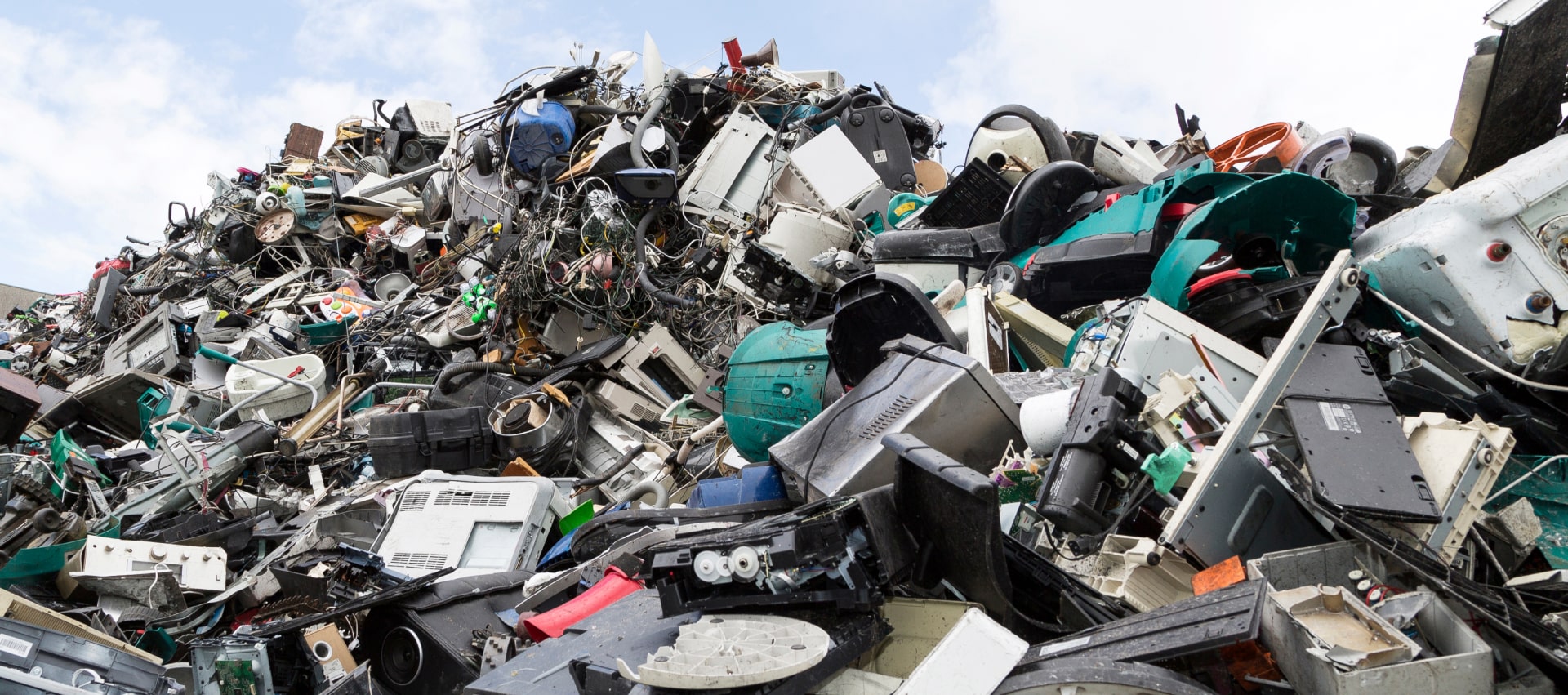
We Offer Comprehensive Recycling Services for Your
Used Electronics
and Other Electrical Equipment.

Jul 27, 2026
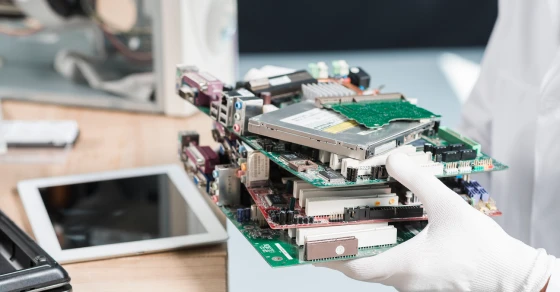
Most finance teams still book retired hardware as a disposal cost. That’s a missed opportunity. With a structured IT asset recovery and remarketing program, end-of-life assets become a recoverable line item that offsets, and in some cases fully covers, the cost of a compliant ITAD program. Recent-generation servers can retain 70 to 80% of their value on the secondary market, and laptops, network gear and enterprise storage all carry residual value as well. This guide breaks down what your retired IT assets are worth, what drives resale pricing and how the recovery process works for Canadian organizations.
IT asset recovery is the process of retrieving end-of-life assets and extracting value from them through refurbishment, redeployment, resale or material recovery. It sits inside the broader IT asset disposition (ITAD) framework, alongside certified data destruction and chain-of-custody documentation.
IT asset remarketing is the revenue side of that process. After data sanitization, functional equipment is tested, graded and refurbished, then sold through wholesale, broker and direct resale channels. Most certified providers operate on a revenue-share model, so a portion of the resale proceeds flows back to your organization as cash or as a credit against program fees.
It’s worth separating remarketing from IT liquidation. Liquidation prioritizes speed, clearing an entire estate of equipment in bulk, often at steep discounts. Remarketing prioritizes value, matching each asset class to the channel where it commands the best price. For a brief on the fundamentals, see these four things you need to know about asset recovery.
Not every device that leaves your environment is worth remarketing, but more of your estate qualifies than most IT and procurement teams assume. Enterprise-grade equipment holds value far better than consumer hardware because the secondary market for it is deep: refurbishers, managed service providers, growing businesses and international buyers all purchase used enterprise gear.
| Asset Type | Typical Resale Window | Typical Value Retention |
|---|---|---|
| Servers (current or previous generation) | 3 to 5 years from release | 70 to 80% of value |
| Business laptops | 2 to 4 years from deployment | 20 to 40% of original cost |
| Network gear (switches, routers, firewalls) | 3 to 6 years from release | 15 to 35% of original cost |
| Enterprise storage arrays and drives | 3 to 5 years from release | 15 to 30% of original cost |
| Desktops and monitors | 3 to 5 years from deployment | 10 to 20% of original cost |
Servers are the standout. Because enterprises refresh on three-to-five-year cycles while the hardware remains serviceable for far longer, recent-generation servers routinely retain 70 to 80% of their value. A structured resale and refurbishment program captures that value before further depreciation erodes it.
When you sell used IT equipment through a certified remarketing partner, five factors drive the final number.
Age and generation. The secondary market prices hardware by generation, not by calendar age. Equipment that’s one generation behind current models commands strong prices. Two or more generations back, values drop quickly.
Condition and completeness. Working units with original components, caddies, rails and power supplies grade higher. Cosmetic damage lowers the grade; missing parts lower it further.
Configuration. Higher-spec processors, more memory and larger storage all lift resale value. Detailed configuration data in your asset audit produces more accurate valuations.
Volume and consistency. Uniform lots of the same make and model are easier to test, grade and sell in bulk, which improves per-unit pricing. Large mixed lots can still perform well, but standardized fleets recover more.
Data-bearing status. Devices with storage require certified data sanitization before resale, which adds processing cost. Under PIPEDA, personal information must be protected through to destruction or irreversible anonymization, so sanitization isn’t optional for Canadian organizations. It’s a compliance requirement that a certified partner builds into the process.
Timing matters too. Hardware depreciates every quarter it sits in a storage room, so the fastest way to lose recovery value is to defer the decision.
A certified recovery program follows a documented sequence, and every step is designed to protect data, preserve value and produce an audit trail.
If you want a closer look at the downstream journey, this overview of what happens to your IT assets after secure disposition walks through each destination.
Here’s the business case in one sentence: resale proceeds from the top 20 to 30% of your estate can subsidize compliant processing for the rest. A full IT asset disposition program includes real costs, including secure logistics, certified data destruction and documentation. Remarketing revenue flows back against those costs, which turns a pure expense into a net figure that’s often close to neutral and, for server-heavy refreshes, can be positive.
There’s also a charitable option. Organizations that don’t want resale proceeds back can direct them to charity, which converts retired hardware into community impact and supports corporate social responsibility reporting.
For Canadian organizations, recovery also aligns with provincial extended producer responsibility (EPR) and stewardship programs, which emphasize reuse and material recovery over landfill. Every asset you remarket is an asset diverted from the waste stream, and that feeds directly into ESG reporting.
Some equipment isn’t worth remarketing. Devices that are several generations old, damaged beyond economic repair or simply too low-value to justify testing costs should go straight to certified material recovery. An R2v3-certified processor recovers the metals, plastics and circuit boards, diverts the material from landfill and issues recycling certificates for your records.
The right split between resale and recycling is an asset-by-asset economic decision, and a good provider makes it transparently, showing you why each unit went down each path. For a deeper comparison of the two streams, read our guide to recycling versus disposal for old IT assets.
Share this with your IT, procurement and finance teams before your next refresh.
IT asset recovery is the process of retrieving IT equipment that’s no longer in active use and recovering value from it through refurbishment, redeployment, resale or recycling. It’s a core component of IT asset disposition (ITAD) and pairs value recovery with certified data destruction.
IT asset recovery works through a documented sequence: audit and valuation, secure pickup under chain-of-custody, certified data sanitization, testing and refurbishment, resale through remarketing channels, and settlement reporting. Assets without resale value are processed for material recovery instead.
IT asset remarketing is the resale of retired IT equipment after certified data sanitization, testing, grading and refurbishment. Providers sell the equipment through wholesale, broker and direct channels, and organizations typically receive a share of the proceeds as cash or a credit against program costs.
IT asset recovery matters because it converts retired hardware from a cost into a revenue source while protecting the business from data breaches. It recovers residual value, ensures compliant data destruction with documentation, and diverts end-of-life assets from landfill in support of ESG commitments.
Asset recovery companies audit your retiring equipment, collect it under chain-of-custody, sanitize all data-bearing devices to certified standards, then refurbish and resell units with market value. They return a share of resale proceeds and issue certificates of destruction and recycling for compliance records.
Retired IT assets are a recoverable line item, not a write-off, and the organizations that treat them that way consistently fund a meaningful share of their ITAD programs with resale proceeds. eCycle Solutions delivers audit, national pickup, PIPEDA-compliant data sanitization, remarketing and R2v3-certified material recovery under one roof, with revenue share or charity donation options. Request a Quote to find out what your retired assets are worth.
Tricia Oldfield is VP Sales & Marketing at eCycle Solutions, Canada’s certified e-waste recycler and ITAD provider. R2v3 certified.

eCycle Solutions is my most recommended and is a highly reputed electronics solutions company. Their team is highly efficient and supportive! My experience with them was so great that I will consider them in the future for sure! Highly recommended!

It is so important to properly recycle your electronics and ensure they do not end up in a landfill. eCycle Solutions is my number one choice! They ensure your electronics are recycled properly. Highly recommended!
eCycle Solutions is Canada’s best electronic recycler. Great team, polite and friendly customer service. Thank you eCycle Solutions for doing a wonderful job. Highly recommended!
