
 Call Us Now: 888.945.2611

Call Us Now: 888.945.2611
We Offer Comprehensive Recycling Services for Your
Used Electronics
and Other Electrical Equipment.

Jan 03, 2026
Recycling household appliances is a cornerstone of environmental responsibility in Canada. Most appliances, ranging from large “white goods” like refrigerators and stoves to small countertop devices like toasters, contain valuable metals and plastics that can be reclaimed for the circular economy. For Canadian households, choosing a certified recycler ensures that hazardous materials are safely diverted from landfills. If you are looking to manage your end-of-life electronics or appliances, eCycle Solutions offers comprehensive IT Asset Disposition and Electronic Recycling services across the country.
For many Canadians, disposing of old technology is no longer just about clearing space; it is a strategic effort to reduce the digital and physical attack surface of their waste. Recycling ensures that materials like steel, copper, and aluminum are returned to the manufacturing stream.
Beyond simple logistics, many appliances—particularly cooling units—contain refrigerants and heavy metals that require expert handling. Utilizing a certified partner guarantees that these units are processed according to strict environmental frameworks. This process moves beyond simple disposal into a realm of strategic Material Recovery, ensuring 100% landfill diversion.
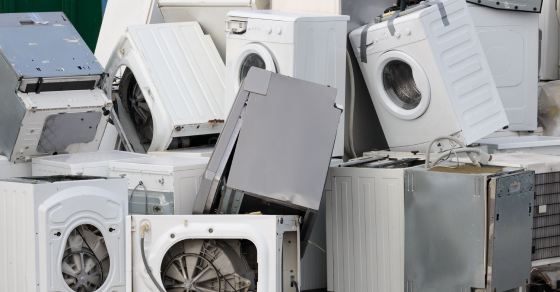
Major appliances are primarily composed of high-grade steel, making them highly valuable for recycling. Most provincial programs and specialized recyclers accept the following:
Because of their size and weight, these items often require specialized logistics to ensure they do not fall into unauthorized hands or end up in scrap heaps that ignore environmental standards.
Small appliances represent a significant portion of household waste and are easily overlooked. These items are generally defined as anything portable that can be plugged into a standard outlet.
Items such as coffee makers, blenders, toasters, food processors, and kettles are fully recyclable. These devices contain a mix of plastic housings, copper wiring, and small motors that can be separated and repurposed.
In 2026, the rise of the Internet of Things (IoT) means even your appliances may hold sensitive data. Modern “smart” fridges, ovens, and coffee makers often store Wi-Fi passwords, usage patterns, or personal account details.
Treating these as simple waste is a critical oversight. Before disposal, it is essential to consider the data lifecycle. For high-risk or smart assets, professional Data Destruction is the only way to ensure that your household’s digital footprint is erased.
To ensure a smooth and compliant recycling process, follow these preparation steps:
Managing the end-of-life of your household or business assets is a board-level priority in the modern era of ESG reporting and environmental scrutiny. By choosing a certified, integrated partner, you transition ITAD and appliance disposal from a secondary logistics function to a critical, auditable control point.

eCycle Solutions is my most recommended and is a highly reputed electronics solutions company. Their team is highly efficient and supportive! My experience with them was so great that I will consider them in the future for sure! Highly recommended!

It is so important to properly recycle your electronics and ensure they do not end up in a landfill. eCycle Solutions is my number one choice! They ensure your electronics are recycled properly. Highly recommended!
eCycle Solutions is Canada’s best electronic recycler. Great team, polite and friendly customer service. Thank you eCycle Solutions for doing a wonderful job. Highly recommended!
